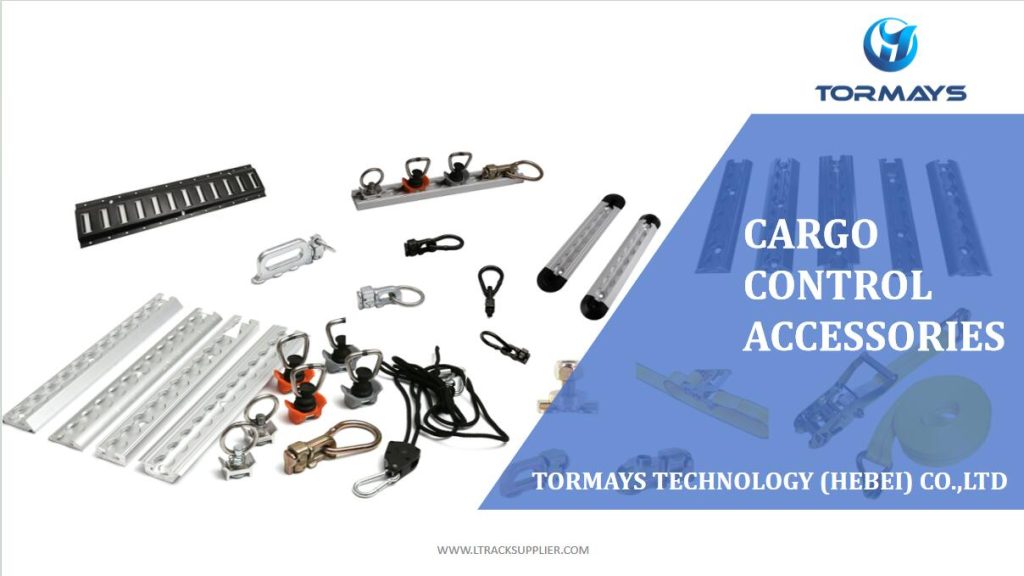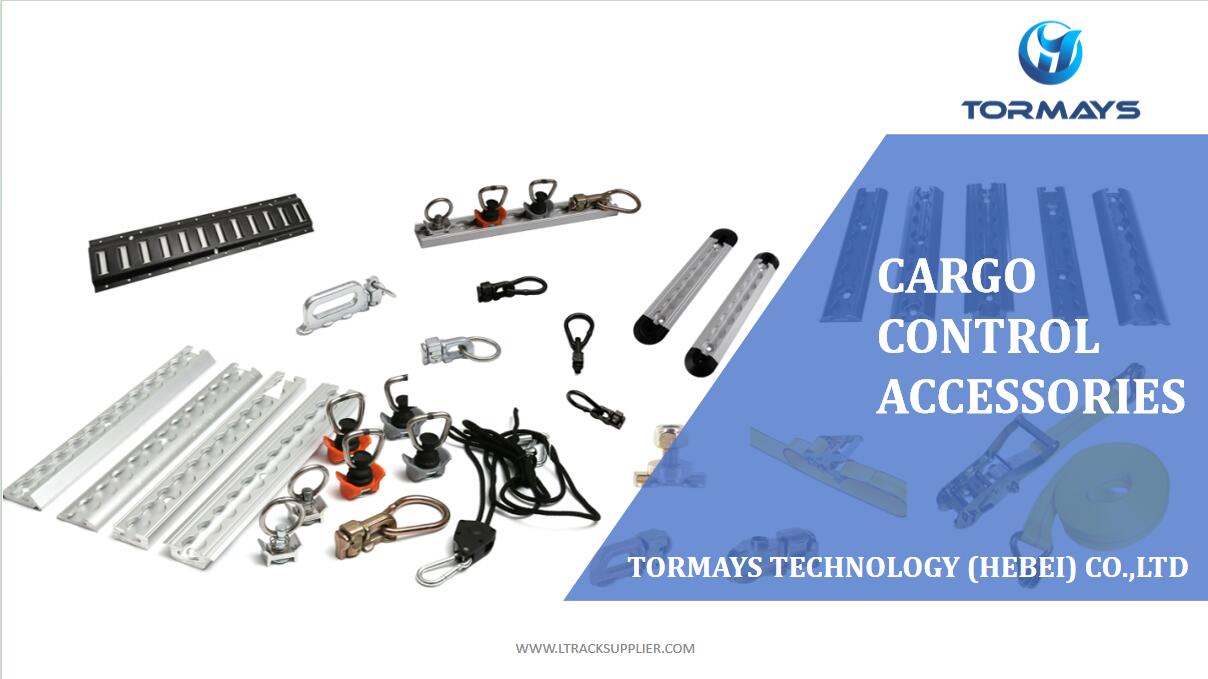
When securing cargo inside vans, pickup trucks, trailers and custom campers, reliable restraint systems are essential for safe transit. L Track and E Track are the two mainstream cargo rail solutions for recreational and commercial vehicles. Van conversion builders, wholesale hardware distributors, fleet operators and bulk modification factories often wonder which aluminum L Track or steel E Track works better.
Your final choice depends on vehicle space, load weight, installation style and how frequently you rearrange anchor points. This guide compares their strength, mounting flexibility and applicable scenarios to help wholesalers, workshop owners and individual haulers pick the right rail system.
What Is the Difference Between L Track and E Track Cargo Securing Systems?
While L Track airline rail and E Track airline rail share the same core function of building removable attachment points for cargo, their profiles and matching track fitting accessories are completely different. Clarifying their gaps is the key to selecting a suitable cargo restraint system.
What Is an L Track Cargo Securing System?
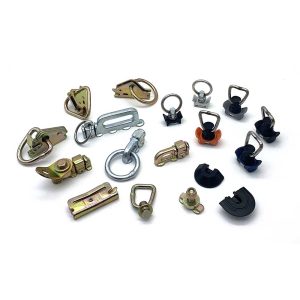
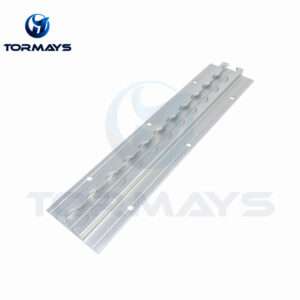
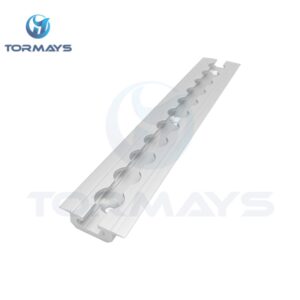
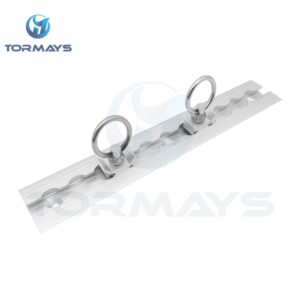
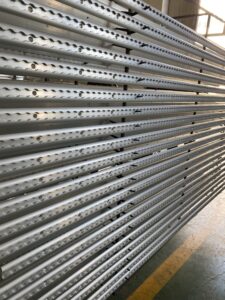
L Track , also widely known as airline track, is a lightweight, low-profile aluminum cargo securing rail originally designed for aircraft freight fixation. Made of thin anodized aluminum, this track has dense oval slots that fit all styles of spring-loaded track fitting, D-rings and quick-release tie down accessories.
Its core competitiveness lies in slim outlines and flexible installation, without occupying extra interior space. That’s why airline track is the top pick for lightweight customized builds:
- Cargo vans & Sprinter van conversions
- Camper van and RV interior refits
- Pickup truck bed cargo tie down
- Motorcycle and ATV transportation
- Small custom recreational vehicle builds
What Is an E Track Cargo System?
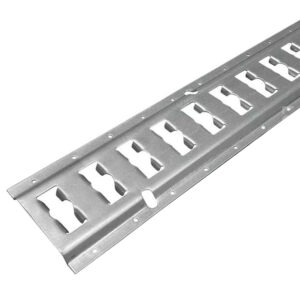
E Track is a heavy-duty galvanized steel cargo restraint rail built for industrial commercial transit. It features wider elongated slots engineered to bear extreme tension, paired with reinforced industrial fittings for heavy loads. It works best on large enclosed cargo trailers, moving trucks, flatbed haulers and fleets transporting construction machinery, where raw load capacity outweighs interior aesthetics.
- E Track is commonly found in:
- Enclosed trailers
- Cargo trailers
- Moving trucks
- Commercial delivery vehicles
- Heavy equipment transportation
While both systems can secure cargo effectively, the ideal choice depends on how and where the system will be used.
L Track vs E Track: Weight Capacity & Structural Strength Comparison
Material composition determines the fundamental strength gap between the two cargo securing systems. Standard logistic track matches double stud track fittings for a maximum breaking strength of 6,000 lbs. It retains full rated load performance whether surface mounted or recessed into vehicle floors, sufficient for daily RV and motorcycle hauling. Its thin aluminum profile sacrifices partial ultimate load for portability and neat visual effects.
Steel cargo track adopts thick rolled steel panels with reinforced slot edges. When fitted with heavy-duty dedicated hardware, its breaking strength peaks at 10,000 lbs. The rigid steel frame resists bending or warping under sustained heavy tension, making it indispensable for construction equipment and pallet freight transportation that requires continuous high load support.
For reference: Light recreational transport relies on Aluminum airline cargo rail’s balanced performance; industrial heavy-duty haulage requires e track tie down kit’s superior raw tensile strength.
Real EU Client Load Test & Application Case
A large European logistics wholesaler and camper modification manufacturing group purchased bulk lots of both aluminum L track and heavy steel E track products to match different load demands across their wholesale distribution and custom vehicle refitting business lines. For their light RV refitting branch, they installed recessed aluminum airline cargo rail paired with forged D-ring hooks inside Mercedes Sprinter campers. Even with full loads of motorcycles, camping equipment and tool sets, the 6,000 lbs breaking strength of the airline track fully met daily cross-country haul demands, with no bending or slot deformation after one year of frequent use.
For their freight trailer division transporting construction pallets and heavy machinery, the workshop fully adopted E track tie down rail systems. Matched with heavy-duty ratchet strap kits, the 10,000 lbs ultimate tensile strength of galvanized steel cargo track provided stable long-term restraint for ultra-heavy cargo. The client reported zero cargo shift or rail damage during long-distance heavy haulage, verifying the obvious strength gap between aluminum logistic track and thick steel E track in real commercial transport.
L Track VS E Track: Which System Is More Flexible for Cargo Management?
Cargo types shift frequently for both commercial fleets and private van owners, which makes adjustable anchor positions a critical factor when picking cargo rails.
L Track Flexibility for Multi-Scenario Load Securing
The dense uniform slots of airline track let users slide and lock track fitting accessories at any position in seconds. One single L Track rail matches dozens of tie down parts to realize multiple transport functions:
- D-ring track fitting for general cargo tie down
- Special wheel chocks for motorcycle & ATV fixation
- Utility S-hooks for outdoor camping gear
- Retractable ratchet straps for mixed loose goods
One Sprinter van equipped with L Track can switch freely between a work vehicle, camping van and motorcycle transporter, without modifying the whole cargo
E Track Flexibility for Single Industrial Scenarios
E track tie down rail also supports rich standard industrial accessories, yet its wide slot spacing limits dense multi-point fixation. Its bulky industrial appearance is acceptable for commercial trailers, but fails to meet the aesthetic demand of premium custom camper builds. For pure freight companies focusing on heavy bulk goods, E Track’s high load capacity remains irreplaceable.
Installation Comparison: L Track vs E Track for Vans, Trucks, and Trailers
Mounting flexibility is a critical distinction shaped by each track’s physical profile. Low-profile L track tie down system supports four installation methods: surface mounting, recessed floor embedding, side panel attachment and integrated cabinet installation. This versatility lets van builders hide anchor rails without breaking the minimalist interior layout of custom campers. For compact vans like Mercedes Sprinter and Ford Transit, installers often reserve hidden slots for recessed L Track to keep cabin surfaces smooth.
The thicker, wider E track tie down system requires solid thick substrates such as diamond plate steel floors and heavy trailer wall panels for stable mounting. Its protruding frame occupies noticeable interior space, so it is rarely used on compact camper vans. Instead, fleets mount continuous E Track rails along full trailer walls to create uniform heavy-duty anchor zones for bulk cargo.
Upgrade Your Vehicle With a Professional L Track Cargo Securing System
Selecting a matching cargo securing system boosts transit safety, protects expensive equipment and maximizes your vehicle’s practicality. For van conversion, RV modification and multi-scenario load securing, L Track airline track delivers lightweight, durable and space-efficient cargo tie down solutions.
As a professional airline cargo rail supplier, we supply full-series aluminum L Track rails, assorted track fitting accessories and complete cargo tie down kits for global wholesalers, van builders and individual vehicle owners. Whether you are renovating a cargo van, building a custom camper, or sourcing bulk cargo securing hardware for resale, our team can provide customized length, surface finish and load capacity solutions.
Contact us today to learn more about our Airline Track , accessories, and customization options.